
Jet mills and air classifier mills are both used to achieve ultrafine particles, but they operate on different principles and are suited to different processing needs. Here is a concise comparison to clarify their core differences. Discover the key differences between a jet mill micronizer and an air classifier mill, including particle size, efficiency, and ideal applications for powder processing.
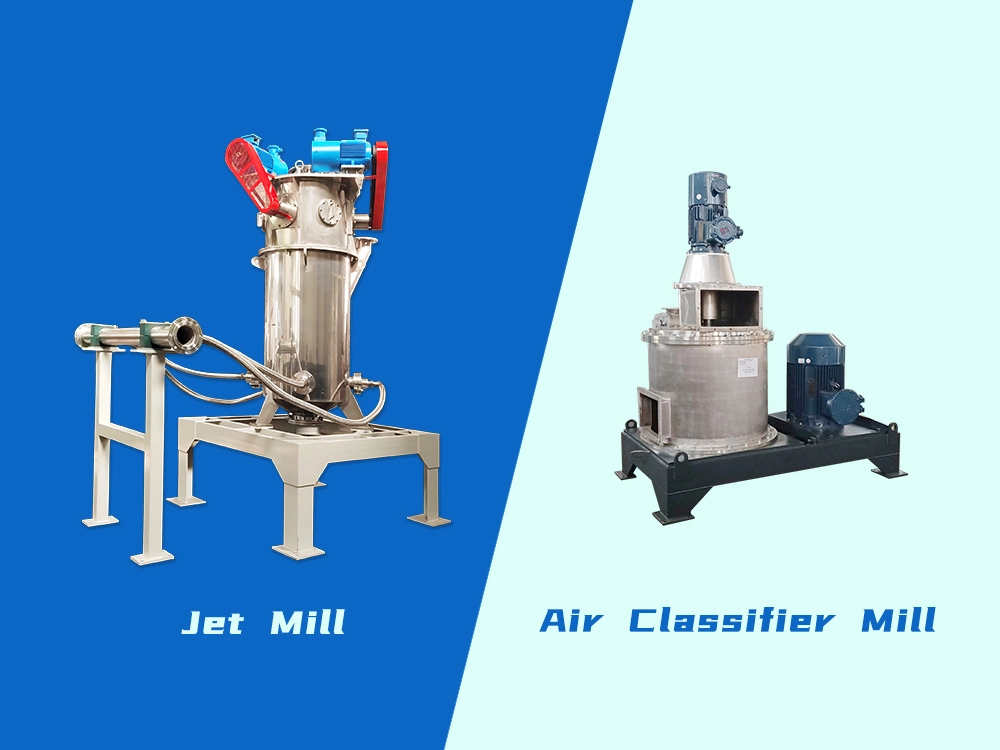
Overview of each mill
Jet Mill Micronizer Fundamentals
A jet mill micronizer grinds materials using high-speed compressed air or steam jets that collide particles inside a grinding chamber. This fluid energy grinding allows for particle size reduction without mechanical impact, making it ideal for heat-sensitive materials. Particles are accelerated and crushed by high-velocity air streams, then separated from the airflow by a built-in classifier or cyclone.
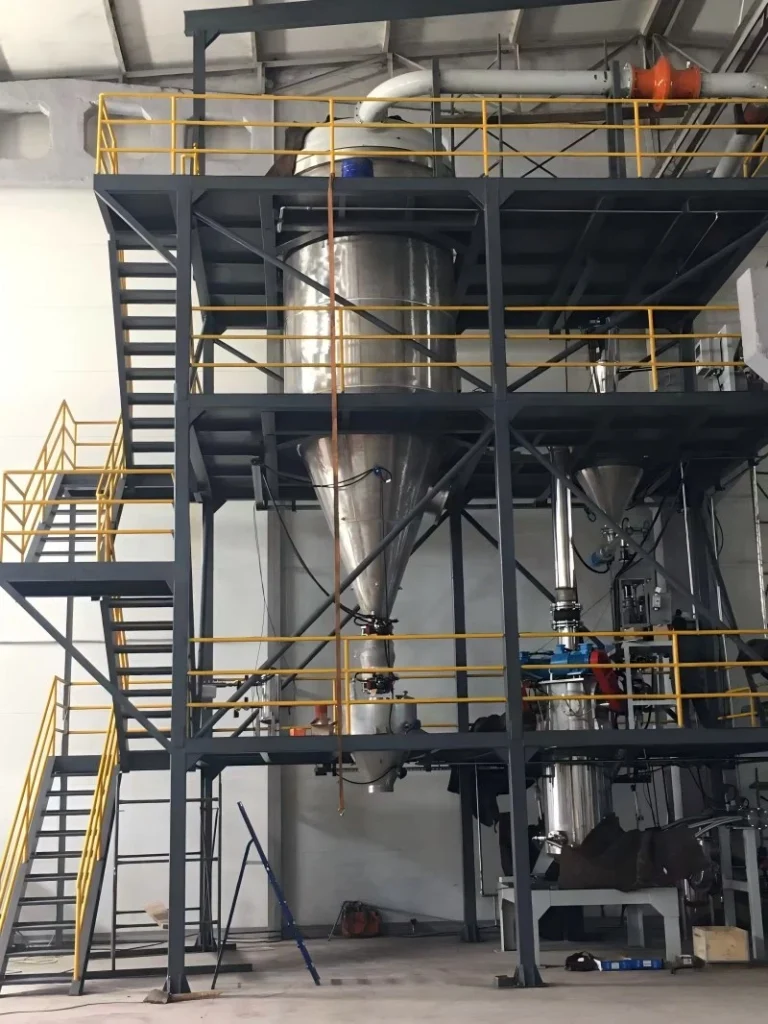
Air Classifier Mill Fundamentals
An air classifier mill combines mechanical impact with air classification to achieve particle size reduction and separation in one step. Material is fed into a grinding zone where hammers or beaters impact it. The finely ground particles are then carried by airflow to a dynamic air classifier wheel. This wheel sorts particles by size—returning coarse ones for regrinding while passing fine powders through to collection.
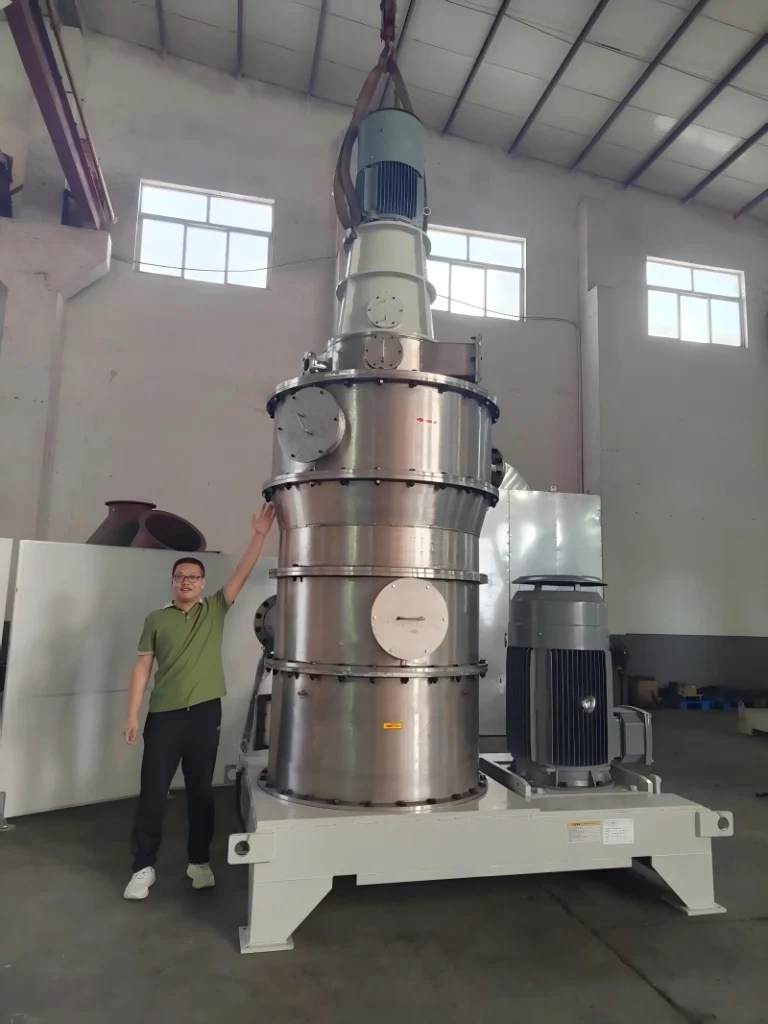
Principle Comparison Table
| Feature | Jet Mill Micronizer | Air Classifier Mill |
|---|---|---|
| Grinding Method | Fluid energy grinding (air jets) | Mechanical impact + air classification |
| Particle Size Range | Ultrafine micronization (<10 microns) | Fine to medium particle sizes |
| Heat Generation | Minimal heat (non-contact grinding) | Moderate heat due to mechanical impact |
| Suitable Materials | Heat-sensitive, abrasive, brittle powders | Versatile: brittle to fibrous, tough powders |
| Air Classification Type | Static or dynamic classifier inside chamber | Dynamic rotating classifier wheel |
Understanding these core principles helps clarify why jet mill micronizers excel at ultra-fine powders with minimal heat impact, while air classifier mills shine in versatility and integrated classification for higher-volume grinding.
Key differences in operation
Achieving Desired Fineness
Both jet mill micronizers and air classifier mills excel at producing fine powders, but they approach fineness differently. Jet mills use fluid energy grinding to reach ultra-fine particle sizes consistently, often below 5 microns, making them ideal for applications where extreme precision is key. Air classifier mills adjust the air classification speed to control particle size, providing more flexibility to produce a range of fine to ultra-fine powders depending on your needs.
Throughput and Energy Dynamics
When it comes to volume, air classifier mills typically handle higher throughput more efficiently. Their design allows continuous classification and grinding, making them a better fit for large-scale production without compromising quality. Jet mills, by contrast, can consume more energy due to their high-velocity air jets but deliver precise particle size control, especially suited for smaller batches or specialty products. So, if energy costs and output speed matter, an air classifier mill might be a better fit.
Purity and Material Compatibility
Both mills support grinding heat-sensitive materials well because they avoid mechanical impact pulverizers that generate heat. Jet mill micronizers offer clean processing environments, reducing contamination risk, which is essential in pharmaceutical and food industries. Air classifier mills also maintain high purity levels with effective powder contamination prevention, but their moving parts may require more maintenance to avoid wear-related contamination. The choice depends on your material’s sensitivity and your industry’s cleanliness standards.
Choosing between them
- For ultra-fine, contamination-sensitive products (e.g., pharmaceuticals, specialty chemicals) where the highest purity and smallest particle sizes are required, a jet mill micronizer is often preferred.
- For scalable, controllable micronization with precise PSD and higher throughput, especially when a defined size range is essential, an air classifier mill is typically advantageous. It can also handle a wider range of materials and simultaneous grinding/classification processes.
Pros Cons and Real World Applications
Jet Mill Micronizer When Precision Trumps Volume
Jet mill micronizers shine when you need ultra-fine, consistent particle sizes. They use fluid energy grinding, which means no mechanical impact to risk heat buildup—perfect for heat-sensitive materials or when powder contamination prevention is a priority. The downside? They usually have lower throughput and can consume more energy. So if your focus is on precision rather than high volume, a jet mill micronizer is a solid choice. You’ll find these widely used in pharmaceutical, chemical, and specialty powder industries where quality control is critical.
Air Classifier Mill Versatility for High Volume Demands
Air classifier mills excel at balancing fine grinding and high throughput thanks to their built-in air classification system. This lets them produce a wide range of particle sizes with energy-efficient grinding, which works great for large-scale industrial jet milling applications. They’re versatile with materials, handling everything from minerals to food ingredients. However, they might not match the ultra-fine precision of jet mill micronizers, especially for very sensitive powders. For businesses prioritizing volume and flexibility, the air classifier mill often fits better.
Head to Head Decision Matrix
| Feature | Jet Mill Micronizer | Air Classifier Mill |
|---|---|---|
| Particle Size Control | Ultra-fine, very precise | Fine to medium, adjustable by classifier |
| Throughput | Lower | Higher |
| Energy Consumption | Higher | More energy-efficient |
| Heat Generation | Minimal (fluid energy grinding) | Moderate (mechanical impact involved) |
| Material Compatibility | Best for heat sensitive, pure powders | Broad compatibility, versatile |
| Maintenance | Moderate, wear parts to monitor | Can be higher due to mechanical parts |
| Application Examples | Pharmaceuticals, chemicals, specialty powders | Minerals, food, bulk industrial powders |
In , if your business demands ultra-fine micronization and purity, jet mill micronizers are your best bet. But when versatility, throughput, and cost-efficiency are key, air classifier mills win out.
Factors to Consider Before Investing
Capital and Operational Expenses
When choosing between a jet mill micronizer and an air classifier mill, start by looking at the upfront costs. Jet mills usually have a higher initial price due to their precision design and complex fluid energy grinding system. Air classifier mills, while still an investment, generally cost less upfront and can handle larger volumes, which might lower operational costs for high throughput needs. Keep in mind, energy consumption plays a role too—jet mills can use more power because of their ultra-fine grinding capabilities.
Maintenance and Safety Protocols
Maintenance routines differ between these two mills. Jet mill micronizers require regular checks on nozzles and grinding chambers to avoid wear that impacts powder purity and performance. Air classifier mills have moving parts like the classifier wheel, which need periodic cleaning and alignment to keep the system efficient and prevent contamination. Safety-wise, both machines handle fine powders that may pose inhalation risks, so proper dust collection and operator protection are essential.
Integration with Broader Systems
Consider how the mill will fit into your current production line. Jet mill micronizers often need specialized feeding and collection equipment due to their focus on ultra-fine powders. Air classifier mills offer more flexibility and can integrate more easily with bulk handling, sorting, or packaging systems because of their versatility in particle size control. Make sure the milling system you choose fits your workflow and production goals without creating bottlenecks.
EPIC Powder Machinery Your Partner in Tailored Milling Solutions
At EPIC Powder Machinery, we understand that every milling project is unique. Whether you need precise ultra-fine grinding with a jet mill micronizer or high-volume versatility from an air classifier mill, we tailor solutions that fit your specific production goals. Our expertise in fluid energy grinding and particle size reduction techniques ensures you get the right equipment for your materials—especially if you’re dealing with heat sensitive or purity-critical powders.
We work closely with customers across the United States to deliver reliable, efficient milling systems that integrate smoothly into existing processes. From initial consultation to ongoing support, EPIC Powder Machinery stands by your side with industry-leading knowledge in mechanical impact pulverizers, air classification in milling, and fine grinding equipment comparison. Choosing us means you’re investing in service, quality, and milling solutions made to match your unique needs.
Empower Your Production with the Right Mill Choice
Choosing between a jet mill micronizer and an air classifier mill comes down to your specific production needs. If you’re aiming for ultra fine powder production with tight particle size control and minimal heat impact, the jet mill is your best bet. It shines in grinding heat sensitive materials and delivering consistent, ultra-fine results.
On the other hand, if you need flexibility with particle size, higher throughput, and the ability to handle a variety of materials, an air classifier mill offers versatility and energy efficiency. Its integrated air classification means you get precise control over your powder’s fineness without extra processing steps.
In the U.S. market, where efficiency, safety, and purity are top priorities, understanding these differences lets you pick the milling equipment that matches your production volume, budget, and material characteristics. Whether you prioritize precision or volume, selecting the right mill boosts your productivity while reducing downtime and operational costs.
Make your milling process work smarter by choosing the mill that fits your product goals, industry demands, and long-term growth—because the right mill choice can make all the difference in your powder processing success.
 English
  Spanish
  German
  French