
Struggling to pick the right air classifier mill for your operation? You’re not alone. Choosing poorly can lead to costly downtime, inconsistent particle sizes, and wasted energy. But getting it right? That means smoother production, sharper product quality, and better ROI. In this guide, you’ll discover exactly what to pay attention to when purchasing an air classifier mill — from key specs and material compatibility to safety and maintenance essentials. Ready to make an informed decision that powers your powder processing to the next level? Let’s get started.
Understanding Air Classifier Mill Basics: Core Working Principle and Components
Before investing in an air classifier mill, it’s crucial to understand how it works and what makes it tick. At its core, an air classifier mill combines grinding and classification in a single, continuous process.
How it works:
- Grinding: The mill uses a high-speed rotor equipped with blades to crush and pulverize material into fine particles.
- Airflow: Simultaneously, a controlled airflow carries the particles toward the classifier wheel.
- Classification: The classifier wheel separates particles by size, pushing oversized material back into the mill for further grinding while allowing fine particles to exit.
What is an ACM mill? How does it work?
Key components include:
- Rotor assembly: Provides the mechanical force for grinding.
- Classifier wheel: Adjusts particle size distribution with precision.
- Airflow system: Controls the movement of particles and maintains efficient separation.
- Feed inlet: Where raw material is introduced.
- Discharge outlet: For fine, processed powder.
Understanding this principle helps set realistic expectations for particle size control, throughput, and energy use. Knowing each part’s role also guides maintenance and troubleshooting efforts, making your mill choice more informed and effective.
Common Industry Applications of Air Classifier Mills

Air classifier mills are versatile machines widely used across various industries that require fine particle size reduction and precise classification. They excel in sectors where consistent, ultra-fine powder quality is a must.
Key industries include:
- Pharmaceuticals: For milling active ingredients and excipients, ensuring uniform particle size critical for product efficacy. The ACM mill for pharmaceuticals is often favored for its precision and contamination control.
- Chemical Industry: Used to process powders and granular materials such as pigments, additives, and catalysts with tight particle size specifications.
- Food Processing: Grinding spices, sugar, and food additives while maintaining purity and preventing overheating.
- Minerals & Mining: For grinding and classifying materials like quartz, feldspar, and other minerals used in ceramics and electronics.
- Cosmetics: Creating fine powders for makeup and skincare products that require smooth texture and consistent particle size.
In these industries, the milling solution must match the material characteristics and desired output. For example, the pharmaceutical sector benefits from air classification safety features and strict hygiene standards, while mineral processing demands robust systems for high throughput capacity.
For applications dealing with sensitive materials like biological powders or silicon-based anode materials, integrating advanced ultrafine grinding technology and tailored milling solutions is key—such as those outlined in studies on the influence of ultrafine grinding technology on biological powder or next-generation anode materials.
Understanding where and how air classifier mills fit helps you identify the right specs and tailor your purchase to industry-specific demands.
Materials Suitability: What Works and What to Avoid in Air Classifier Mills
Choosing the right materials for your air classifier mill is crucial to get the best performance and avoid costly issues. Air classifier mills excel with dry, free-flowing, and moderately hard materials. Commonly processed materials include pharmaceuticals, food powders, minerals, chemicals, and certain battery materials. These materials typically allow efficient fine particle size reduction without excessive wear or clogging.
However, there are some materials to avoid or handle with caution:
- High moisture content: Wet or sticky materials can cause clogging and reduce milling efficiency.
- Very abrasive substances: Excessively abrasive powders accelerate wear and can damage mill components unless specially lined.
- Fibrous or elastic materials: These tend to wrap around rotors or cause blockages.
- Explosive or highly volatile powders: Require dedicated explosion protection features and strict safety measures.
Understanding this compatibility prevents downtime and extends your mill’s lifespan. It’s also wise to consider consulting case studies related to your industry, such as battery material processing or pharmaceuticals, to see how air classifier mills perform with similar substances. For example, exploring detailed applications like battery materials processing can provide practical insights.
Matching your materials to air classifier mill specifications ensures smooth operation, reliable throughput, and consistent product quality.
Understanding Air Classifier Mill Basics Before You Buy: Production Volume Relevance
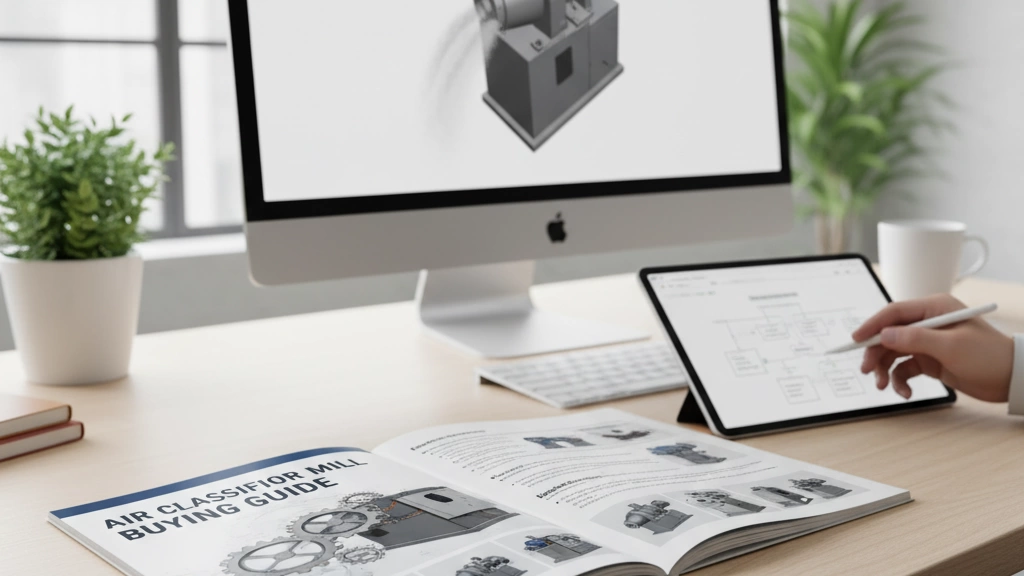
When choosing an air classifier mill, it’s crucial to match the machine’s capacity with your production volume. These mills range from compact lab-scale models to large industrial systems designed for high throughput. Lab-scale mills are ideal for product development, small batch processing, and testing material behavior without committing to full-scale production.
For industrial throughput, you’ll need a robust mill that handles continuous operation and higher feed rates without compromising particle size control. This scale-up capability ensures consistent output whether you’re producing kilograms or tons daily.
Factors to consider include:
- Batch size flexibility: Can the mill efficiently switch between small and large runs?
- Continuous vs. batch processing: Some mills better support continuous feeding for large volumes.
- Throughput capacity: Align mill specifications with your daily production goals to avoid bottlenecks.
Choosing the right size supports operational efficiency and reduces waste, especially in industries such as pharmaceuticals, food, and chemicals. For detailed examples of how air classifier mills perform in food and health products, check out our overview of food and health milling applications.
Step 1: Define Your Processing Requirements – Target Particle Size and Classifier Settings
Before buying an air classifier mill, knowing your target particle size is key. The mill’s classifier controls how fine your powder gets by separating particles based on size using airflow and rotor speed.
What to consider for particle size and classifier settings:
| Factor | Details | Why It Matters |
|---|---|---|
| Desired particle size | Microns or mesh size needed | Ensures final product quality |
| Classifier rotor speed | Adjustable RPM settings | Fine-tunes particle separation |
| Airflow control | Volume and velocity of air moving | Affects classification efficiency |
| Product shape and density | Influences how material behaves in airflow | Impacts particle sorting accuracy |
Match your target size to the mill’s classifier options. For instance, a pharmaceutical-grade air classifier mill (ACM mill) requires tighter control for fine powder, while industrial powder grinding may allow a broader size range.
Getting the classifier settings right reduces rework and waste, improves yield, and keeps your process consistent. If you want to dive deeper into particle size reduction for sensitive materials, exploring options like industrial powder grinding equipment with flexible classifier adjustments is recommended.
For more insight into particle size control and classifier tuning, check out this guide on how to choose a suitable air jet mill for pulverizing lithium iron phosphate.
Step 1: Define Your Processing Requirements – Throughput Capacity and Feed Rate Considerations
When purchasing an air classifier mill, getting clear on your required throughput capacity and feed rate is essential. These factors define how much material you need to process over a given time and directly impact the mill’s size and design.
Key Points to Consider:
- Throughput capacity: Determine daily or hourly output goals (e.g., kg/h or tons/day). This helps pick a mill able to handle your production volume.
- Feed rate consistency: Ensure your feed system can deliver material smoothly without overloading or underfeeding the mill.
- Material flow properties: Sticky or irregular particles may require slower feed rates or special handling.
- Scalability: If growth is anticipated, choose a mill model that can easily scale throughput without major redesign.
| Factor | What to Check | Why It Matters |
|---|---|---|
| Throughput capacity | Match with production targets | Avoid bottlenecks or oversized equipment |
| Feed rate | Steady, controllable feed | Smooth operation and consistent product quality |
| Material characteristics | Flowability, abrasiveness | Impacts feed system and mill wear |
| Scalability | Ability to handle increased rates | Future-proofs the investment |
Properly aligning throughput capacity and feed rate ensures your air classifier mill delivers optimal performance, minimizes downtime, and controls energy use. For detailed examples of equipment suited to various production scales, check the ball mill and air classifier production systems portfolio.
Pay close attention here to avoid underestimating your process needs, which could limit efficiency and increase operational costs.
Material Hardness, Moisture, Abrasiveness, and Compatibility Matrix
When buying an air classifier mill, knowing your material’s physical properties is crucial. These factors impact mill performance, wear, and product quality.
| Property | What to Consider | Impact on Milling |
|---|---|---|
| Hardness | Soft to very hard materials (Mohs scale rating) | Harder materials cause more wear on rotors and liners. Choose mills with durable build quality for abrasive feeds. |
| Moisture | Dry, slightly damp, or sticky powders | High moisture can cause clogging or agglomerates. Consider mills with moisture management or special airflow designs. |
| Abrasion | How abrasive the material is (e.g., minerals vs. pharmaceuticals) | Highly abrasive materials require stronger liners and regular maintenance. |
| Compatibility | Reactive or sensitive materials needing special handling | Some materials require inert atmospheres or specific mill materials to avoid contamination. |
Tips:
- For hard or abrasive powders, ask about wear-resistant liners and rotor materials.
- If your feed has moisture above 5%, check if the mill design supports drying or has anti-clog features.
- Review the material compatibility matrix of the machine manufacturer to avoid processing problems or contamination.
Understanding these properties upfront helps you select an air classifier mill that fits your specific materials and avoids costly downtime.
For more on material handling and machine compatibility, explore detailed ball mill and air classifier production systems.
Step 1: Define Your Processing Requirements – Energy Consumption and Environmental Compliance
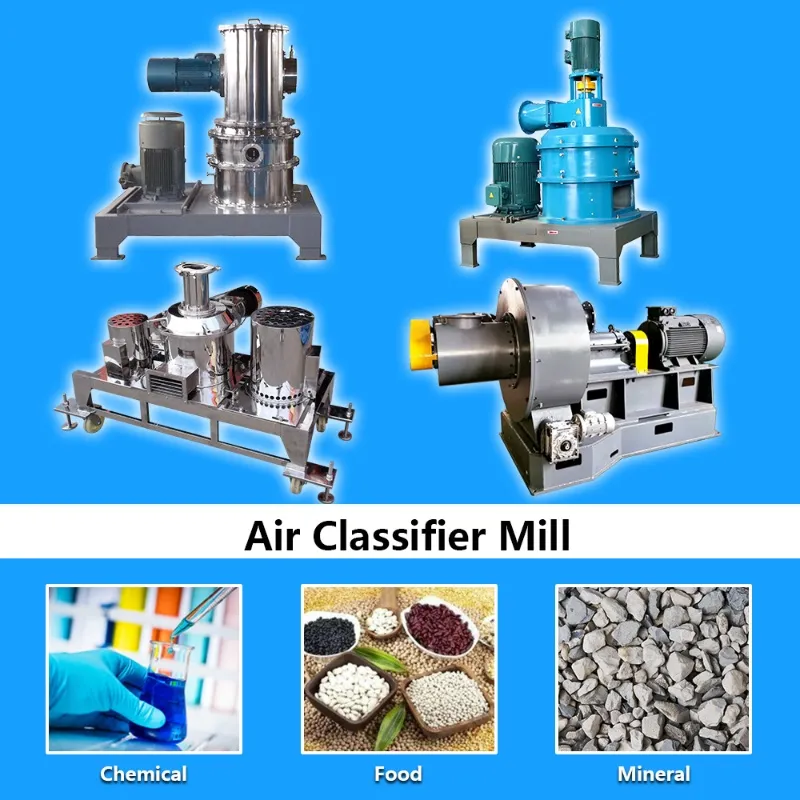
When choosing an air classifier mill, energy use and environmental rules can’t be ignored. Efficient mills lower your power bills and help you meet local and global emissions standards.
What to watch for:
| Factor | Why It Matters | What to Do |
|---|---|---|
| Energy consumption | High usage raises costs and heat output. | Look for energy-efficient motors and optimized airflow systems. |
| Environmental compliance | Dust, noise, emissions may be regulated. | Ensure the mill meets standards like dust control and noise limits. |
| Cooling requirements | Overheating affects performance and safety. | Check if the system offers built-in cooling or ventilation options. |
| Waste handling | Dust and fines management is crucial. | Opt for mills with effective collectors and filters. |
By clearly defining how much energy your process can use and which environmental rules you must follow, you avoid hidden costs and compliance headaches later.
For insights on managing fine powder safety and efficiency, explore our guide on air classification safety features.
Step 2: Evaluate Key Technical Specifications: Mill Design Types and Classifier Stages Comparison
When purchasing an air classifier mill, understanding the different mill designs and classifier stages is key. These choices affect particle size control, efficiency, and maintenance.
Common Mill Design Types
| Mill Type | Description | Best For | Pros | Cons |
|---|---|---|---|---|
| Hammer Mill | Hammers impact material, then classifier separates fines | Coarse to fine grinding | Simple, cost-effective | Not ideal for ultra-fine powder |
| Pin Mill | Material is sheared between pins | Medium to fine particle sizes | Good for brittle materials | Higher energy use |
| Air Classifier Mill (ACM) | Combines impact milling and air classification | Fine and ultra-fine grinding | Precise control of particle size | More complex, higher cost |
Classifier Stages: Single vs Multi-Stage
| Stage Type | Description | Effect on Product Quality | Typical Application |
|---|---|---|---|
| Single-Stage Classifier | One air classifier wheel adjusts particle size | Basic particle size separation | General purpose milling |
| Multi-Stage Classifier | Two or more classifier wheels with adjustable speeds | Better control, narrower size distribution | Pharmaceuticals, specialty powders |
What This Means For You
- Mill design affects processing speed and particle size range. For example, the ACM mill is favored in industries like pharmaceuticals for fine particle size reduction due to its precise classifier stage setup.
- Multiple classifier stages allow better control, improving product consistency and reducing rework.
- Choose a design that aligns with your material properties and desired output. For deeper insights, explore detailed air classifier mill specifications and designs.
Selecting the right combination sets the stage for efficient, reliable milling that meets your production needs.
Step 2: Evaluate Key Technical Specifications
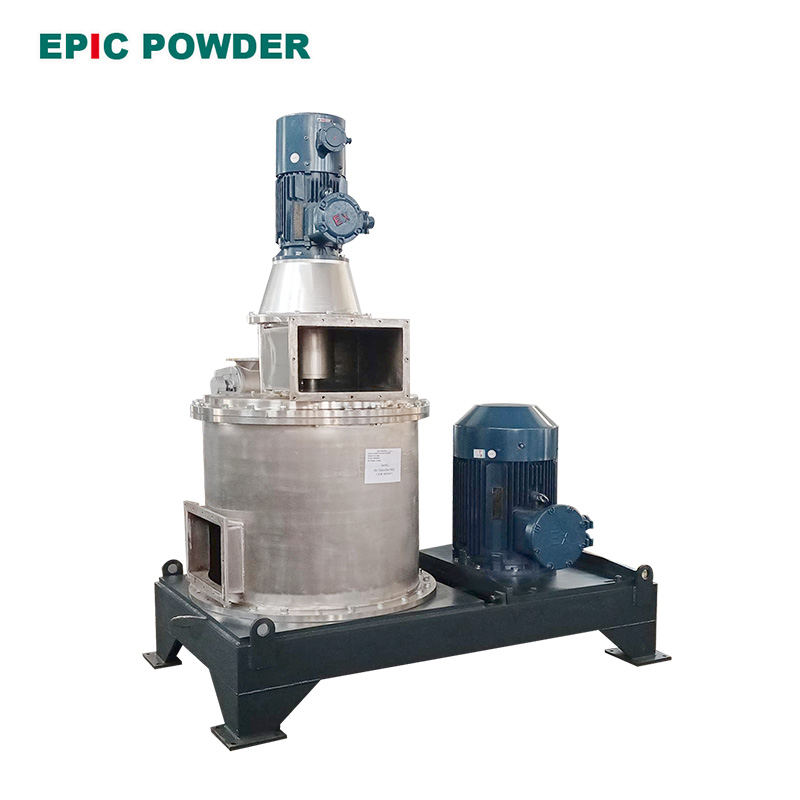
Adjustability: Rotor Speed, Airflow, Digital Monitoring
When purchasing an air classifier mill, adjustability is a must-have for precision and efficiency. The ability to finely control rotor speed and airflow directly affects the final particle size and product consistency.
Why adjustability matters:
- Rotor Speed: Varying the rotor speed lets you control the grinding intensity. Higher speeds usually mean finer particles but can increase wear and energy use.
- Airflow Control: Adjusting airflow influences material classification and product separation. Proper airflow ensures that only the right-sized particles exit, reducing waste and reprocessing.
- Digital Monitoring: Real-time digital controls and monitoring enhance precision, making it easier to maintain consistent output, quickly troubleshoot issues, and optimize performance.
Here’s a quick look at key adjustable features:
| Feature | Benefit | What to Check |
|---|---|---|
| Rotor Speed | Controls grinding fineness | Range of speed, ease of adjustment |
| Airflow Rate | Affects classification accuracy | Precise control, stable airflow |
| Digital Monitoring | Enables real-time control | User-friendly interface, data logs |
Choose mills that offer wide, easy adjustments and smart controls. This flexibility helps you handle different materials and meet varied particle size specs without downtime.
For more on comparable milling equipment and airflow effects, you might find insights helpful in this article on industrial powder grinding equipment.
Step 2: Evaluate Build Quality – Liners, Rotor Balancing, Stainless Steel Grades
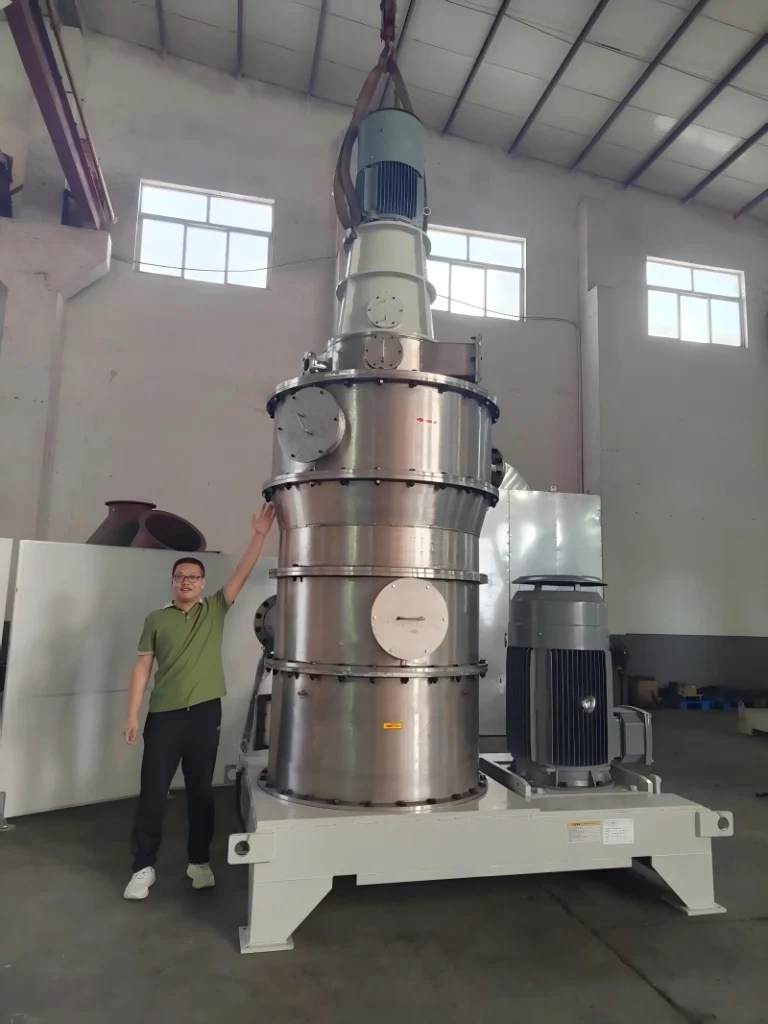
When buying an air classifier mill, build quality can make or break your operation. Here’s what you need to focus on:
Liners
- Material: Opt for wear-resistant liners like hardened steel or tungsten carbide to handle abrasive materials.
- Replaceability: Easily replaceable liners reduce downtime and maintenance costs.
- Protection: Quality liners protect the mill housing from damage and extend machine life.
Rotor Balancing
- Precision balancing ensures smooth operation to reduce vibration and noise.
- Imbalanced rotors cause premature wear, energy waste, and can impact particle size consistency.
- Regular balancing checks help maintain performance and reduce maintenance frequency.
Stainless Steel Grades
| Grade | Application | Benefits |
|---|---|---|
| 304 | General purpose | Corrosion-resistant, cost-effective |
| 316 | Pharma & food-grade | Superior corrosion & chemical resistance |
| 316L | High hygiene standards | Low carbon for better weldability, corrosion resistance |
Using the right stainless steel grade is critical, especially in pharmaceuticals and food industries where contamination is a concern.
Pro Tip: Match your mill components’ materials to your product’s chemical and physical properties to avoid corrosion, contamination, or early wear.
By focusing on these build quality factors, you’ll ensure your air classifier mill runs efficiently, safely, and lasts longer. For more on materials compatibility, see our insights on dry grinding techniques tailored for various powders.
Step 2: Evaluate Key Technical Specifications – System Integration with Feeders and Collectors
When buying an air classifier mill, seamless integration with feeders and collectors is a must. The system needs to work smoothly from start to finish to avoid downtime and keep production efficient.
Key points to check for system integration:
| Component | What to Look For | Why It Matters |
|---|---|---|
| Feeders | Consistent feed rate, adjustable speed | Ensures steady material flow and prevents overloading the mill |
| Collectors | High-efficiency dust collection, easy access | Keeps the working environment clean and maximizes product recovery |
| Control Systems | Compatible control interfaces, digital monitoring | Smooth coordination between components for real-time adjustments |
| Space & Layout | Compact design, flexible setup options | Fits easily into existing production lines without major changes |
Good integration reduces bottlenecks and maintenance issues, boosting overall throughput capacity for your ACM mill. Plus, effective dust collection is essential for meeting environmental and safety standards.
For industries like pharmaceuticals or building materials, having a well-integrated system is a huge advantage. If you’re working with sensitive powders, proper collection avoids cross-contamination and product loss. You can find practical examples of integrated setups in building materials milling cases that demonstrate how smart design improves workflow.
In short, don’t overlook system integration when reviewing air classifier mill specifications—it plays a major role in operational reliability and efficiency.
Step 3: Prioritize Safety, Maintenance, and Operational Reliability
Compliance with Safety Standards and Explosion Protection
When buying an air classifier mill, safety has to be top of mind. These machines often handle fine powders, which can pose explosion risks if not managed correctly. Make sure the mill complies with relevant safety standards like ATEX or NFPA. Explosion-proof designs and built-in suppression systems are essential features to look out for.
Additionally, the mill should have proper dust containment to prevent airborne particles that can affect both operational health and product quality. Safety interlocks and emergency shutdowns add extra layers of protection, preventing accidents before they escalate.
Choosing a mill with certified explosion protection and safety features not only protects your team but also reduces downtime caused by incidents, contributing to overall operational reliability. Prioritize models that have proven safety track records in industries handling combustible powders.
For more on safety and compatibility in powder processing, you can check the material suitability guides like those used in high-purity ultrafine alumina powder preparation, which highlight critical precautions for safe milling.
Step 3: Prioritize Maintenance Ease for Reliability
When buying an air classifier mill, maintenance ease is a must-have for smooth operations. Look for designs that provide quick access to critical parts like rotors, classifiers, and liners — this saves time during cleaning and repairs. Features like self-cleaning mechanisms reduce downtime by preventing material buildup, especially with sticky or abrasive powders.
Check the mill’s MTBF (Mean Time Between Failures) rating to gauge its reliability. A higher MTBF means less frequent breakdowns, which cuts maintenance costs and improves productivity. Investing in durable parts, like high-grade liners and balanced rotors, also lowers wear and tear, meaning fewer replacements.
A mill that’s easy to clean and service means your team spends less time on maintenance and more on production. Keep this in mind to avoid common operational hiccups and ensure consistent milling performance.
Operational Safeguards: Auto-Shutdown and Noise Control
When choosing an air classifier mill, operational safeguards are crucial for smooth and safe milling. Look for features like auto-shutdown systems that kick in automatically if something goes wrong—like overloads or overheating. This protects your equipment from damage and keeps your operation running without costly downtime.
Noise control is another factor often overlooked. Classifier mills can be loud, which affects worker comfort and compliance with workplace noise regulations. Investing in mills designed with sound-dampening technology or noise enclosures helps keep the environment safer and more pleasant.
Together, these safeguards improve operational reliability, protect your investment, and ensure a safer workplace overall. For more on optimizing your industrial powder grinding equipment, consider mills with digital monitoring that alerts you early to potential problems, so fixes happen before shutdowns are needed.
User Experience: Setup Time and Common Pitfalls
When purchasing an air classifier mill, consider how easy it is to set up and operate. A smooth setup means less downtime and faster production starts. Look for machines with clear, straightforward assembly instructions and intuitive controls. Digital monitoring and adjustable settings can simplify fine-tuning but should be user-friendly, not overly complicated.
Common pitfalls to watch out for include:
- Complex calibration steps that require specialist knowledge or extra tools
- Time-consuming cleaning procedures that slow down batch changes
- Inadequate operator training or unclear manuals leading to improper use
- Overlooking small details like proper rotor balancing or airflow adjustment, which affect product quality
A good air classifier mill should minimize these issues, helping your team get it up and running quickly and confidently. This ease of use not only reduces errors but also improves overall productivity.
For a closer look at how to optimize milling processes and avoid setup headaches, explore resources on industrial powder grinding equipment that highlight practical user experience tips.
Step 4: Assess Cost, ROI, and Vendor Support

Total Cost of Ownership Breakdown and ROI Examples
When investing in an air classifier mill, the upfront price is just one part of the equation. It’s important to look at the total cost of ownership (TCO)—this includes installation, energy use, maintenance, spare parts, and downtime costs. A machine with a slightly higher initial cost but better energy efficiency and lower maintenance needs often delivers a stronger return on investment (ROI) over time.
To estimate ROI, consider factors like:
- Energy consumption vs. traditional mills, which can significantly affect operating costs.
- Maintenance frequency and cost, including wear parts like liners and rotors.
- Production uptime and throughput efficiency—higher output with fewer breakdowns boosts ROI.
- Product quality improvements, such as achieving finer particle sizes faster, which can reduce waste and reprocessing.
For example, companies switching to an energy-efficient ACM mill have reported up to 20% lower power bills and fewer maintenance stops, speeding up production cycles and cutting downtime losses. These improvements translate into measurable cost savings and faster payback periods.
Balancing initial investment against these longer-term savings will help you pick the right air classifier mill that meets both production and budget goals. For detailed insights on efficient powder production costs, you might find this guide on calcium carbonate grinding mill useful to understand operational cost factors better.
Step 4: Assess Cost, ROI, and Vendor Support – Value-Added Services

When evaluating an air classifier mill, don’t just stop at the price tag. Look closely at the value-added services offered by the vendor, as these can save you time, money, and headaches down the line. Key services to prioritize include:
- Pilot Testing: Vendors who provide pilot or trial runs let you test your material before committing. This ensures the mill meets your target particle size and throughput expectations, reducing risk.
- Warranties: A solid warranty protects your investment from unexpected repairs and gives you peace of mind regarding the build quality and durability of the mill.
- Remote Support: Technical glitches happen, but with remote support, you get immediate troubleshooting help without waiting for a technician onsite. This keeps downtime and production losses minimal.
Choosing a supplier that bundles these extras can improve your overall ROI on air classifier mills by boosting operational reliability and ensuring you get the exact performance you need. Always ask vendors about these services upfront during your selection process.
Vendor Selection: Certifications, Case Studies, Lead Times
When choosing an air classifier mill vendor, don’t just focus on the price tag. Verify that the supplier holds relevant certifications like ISO or industry-specific standards, which ensure quality and compliance. Ask for case studies or client references to see how their ACM mills have performed in real-world settings—this gives you a clear idea of reliability and ROI in your market.
Lead times are critical too. Long waiting periods can disrupt your production schedules, so confirm upfront how quickly the vendor can deliver and install the machine. A responsive vendor with proven credentials and solid delivery timelines makes your investment smoother and more predictable.
For more insight on selecting milling equipment, check out this detailed guide on project cooperation in powder processing, which covers vendor relations and operational readiness.
Long-term Scalability and Upgradability
When investing in an air classifier mill, thinking long-term pays off. Your production needs might grow or change, so it’s crucial to pick a mill that can scale up without a full replacement. Look for models designed with modular components—this makes it easier to upgrade parts like rotor assemblies, classifiers, or control systems as your requirements evolve.
Upgradability also means staying current with technology advancements, such as improved digital monitoring or more energy-efficient designs. A future-proof machine minimizes downtime and keeps you competitive. Don’t forget to discuss expansion options with your vendor to ensure your air classifier mill can handle increased throughput or different materials down the line.
Focusing on scalable solutions helps maximize your return on investment (ROI) and extends your equipment’s lifespan, making it a smart choice for growing operations. For insights on evaluating costs alongside production capabilities, check out detailed breakdowns of industrial powder grinding equipment and related services that support seamless system upgrades.
EPIC Powder Machinery: Brand Expertise and Energy Efficient Designs
When it comes to precision milling, EPIC Powder Machinery stands out with decades of experience in delivering reliable air classifier mills tailored to modern industry needs. Their machines are engineered not just for performance but also for energy efficiency, helping you reduce operational costs while maintaining top-quality fine particle size reduction.
EPIC’s ACM series combines robust construction with smart design, featuring optimized airflow and advanced classifier technology that ensures consistent particle sizing with minimal energy consumption. This focus on efficiency aligns perfectly with today’s push for greener manufacturing and tighter environmental compliance.
Choosing EPIC means partnering with a brand that prioritizes both innovation and sustainability—offering mills designed to boost your throughput capacity without compromising on power use. Their solutions support industries from pharmaceuticals to industrial powder grinding, adapting to your specific material compatibility requirements.
For a deeper look at how air classifier mills work and the factors affecting powder properties, check out this detailed guide on air classification and separation technology. By trusting EPIC Powder Machinery, you tap into a wealth of expertise and energy-saving designs built to support your production goals efficiently.
EPIC Powder Machinery: Proven Success and Client Outcomes
When it comes to choosing an air classifier mill, real-world results matter. EPIC Powder Machinery has a strong track record of delivering precision milling solutions that consistently meet and exceed client expectations. Our customers span industries from pharmaceuticals to specialty chemicals, benefiting from clean, fine particle size reduction and reliable throughput capacity.
Some of our success stories include:
- A pharmaceutical company that achieved ultra-fine powders with consistent particle size distribution using our ACM mill for pharmaceuticals, enhancing product quality and process efficiency.
- Industrial powder grinding operations that lowered energy consumption while increasing output by switching to EPIC’s energy-efficient designs.
- Manufacturers who improved product purity and reduced contamination risks thanks to our advanced air classification safety features and high-grade material compatibility.
These outcomes underscore our commitment to providing equipment that not only fits technical specifications but also drives measurable ROI and operational excellence. By partnering with EPIC Powder Machinery, you’re backed by years of experience and a strong support network dedicated to optimizing your milling process.
For a closer look at how our solutions can transform your milling operations, check out our detailed discussions on industrial powder grinding equipment and the difference EPIC makes in precision particle size control.
EPIC Powder Machinery: Your Trusted Partner in Precision Milling Solutions
When you’re ready to invest in an air classifier mill, partnering with a reliable manufacturer like EPIC Powder Machinery makes all the difference. We don’t just supply industrial powder grinding equipment — we deliver precision-engineered mills tailored to your unique processing needs.
To ensure you get the right air classifier mill, start with a clear buyer’s checklist: define your target particle size, assess material compatibility, confirm throughput needs, and prioritize maintenance and safety features. EPIC Powder Machinery supports you throughout this process with pilot testing, expert consultation, and customized solutions designed to maximize your ROI.
Ready to take the next step? Contact us for a consultation and get a detailed walkthrough of our ACM series. Whether you’re upgrading your pharmaceutical milling line or optimizing food-grade powder processing, our energy-efficient designs and proven track record ensure long-term success. Get in touch today and experience why industries trust EPIC Powder Machinery for precision milling solutions.
 English
  Spanish
  German
  French