
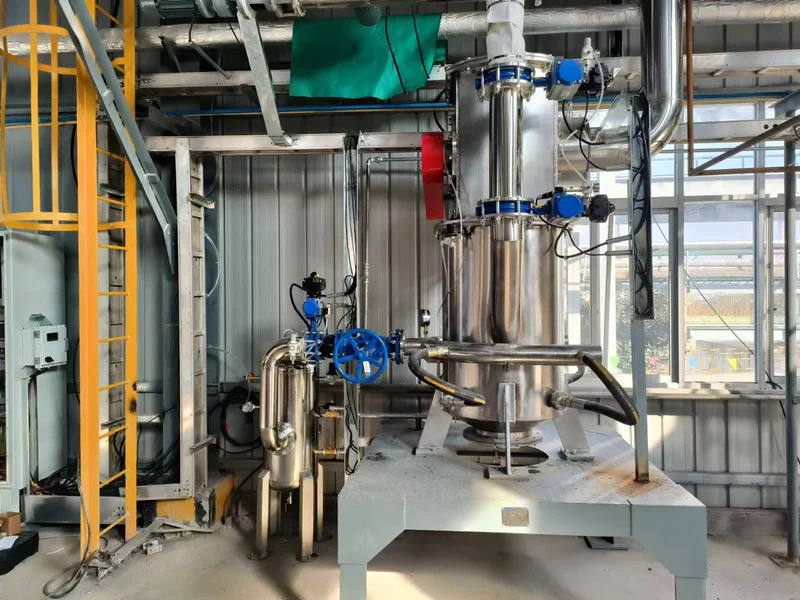
If you’re working with NdFeB magnets and aiming for ultra-fine powders with minimal oxidation, then choosing the right air jet mill for NdFeB in 2025 is critical. The stakes have never been higher: achieving submicron particle sizes while protecting against oxygen contamination is essential for magnet performance—especially in EVs, aerospace, and renewables. But it’s not just about grinding finer anymore. Today’s mills must combine advanced inert gas protection, energy efficiency, and smart control systems to keep you competitive in a rapidly evolving market. Ready to cut through the noise and find the perfect air jet mill tailored to your rare-earth powder needs? Let’s dive in.
Fundamentals of Air Jet Milling for NdFeB
Air jet milling is the go-to grinding technology for NdFeB (neodymium-iron-boron) magnets because it preserves material quality through particle-on-particle impact. Instead of grinding between metal surfaces, powders collide at supersonic speeds within the mill, minimizing contamination and abrasion—a vital advantage for sensitive rare earth powders.
Choosing an air jet mill over traditional mills is especially important for NdFeB due to its heat sensitivity and oxidation risk. Mechanical mills often generate heat that can degrade magnetic properties, while air jet mills maintain low temperatures and prevent wear-induced contamination. Plus, they excel at delivering ultrafine particle sizes and tight size distributions, critical for effective sintering and magnetic performance.
Looking ahead to 2025, sustainable compressed air systems and energy-efficient designs are shaping air jet milling. Advances include engineered nozzles that reduce air consumption and closed-loop gas recirculation to lower energy costs. These innovations align with the growing industry focus on greener manufacturing without compromising powder quality.
Key Criteria for Selecting an Air Jet Mill Tailored to NdFeB
Choosing the right air jet mill for NdFeB requires a clear focus on specific features to handle this sensitive rare earth material efficiently and safely.
Particle Size and Distribution Control
- D50 Target: Aim for ultrafine NdFeB powder with a narrow particle size distribution around the D50 target (typically 1-5 µm).
- Classifier Types: Opt for mills with adjustable inert gas air classifiers for precise size control.
- Operational Metrics: Stable feed rates and consistent air pressure ensure uniform output.
Oxidation Prevention Features
- Inert Atmosphere: Use nitrogen or argon closed-loop systems to minimize rare earth powder oxidation.
- Real-time O₂ Sensors: Continuous oxygen content analysis helps keep oxidation risk low.
- Cryogenic Options: For extreme oxidation-sensitive milling, consider cryogenic nitrogen protection to maintain magnetic performance.
Capacity and Scalability
- Modular designs support smooth scale-up from lab-scale trials to full production lines without compromising particle quality.
- Ensure your mill handles your feed size requirements, often requiring pre-milling or classification.
Energy Efficiency and Operating Costs
- Nozzle Geometry: Advanced Laval nozzle designs improve compressed air use efficiency.
- Compressed Air Use: Sustainable compressed air systems cut energy bills.
- Factor in ROI by balancing upfront cost with lower operating expenses.
Material Handling and Safety
- Enforce feed size limits to avoid blockages and maintain optimal milling speed.
- Explosion-proof enclosures and easy-clean designs protect both operators and product quality.
Integration with Upstream/Downstream Processes
- Seamless compatibility with HDDR (hydrogen decrepitation), sintering furnaces, and PLC automation ensures smoother workflows.
| Criteria | Important Features | Why It Matters |
|---|---|---|
| Particle Size Control | Adjustable classifier, stable air pressure | Consistent ultrafine NdFeB powder |
| Oxidation Prevention | Closed-loop N₂/Ar, O₂ sensors, cryogenic option | Preserve magnetic performance |
| Capacity & Scalability | Modular design, feed size compatibility | Scale production smoothly |
| Energy & Costs | Laval nozzles, efficient compressed air usage | Lower energy bills, better ROI |
| Material Handling & Safety | Explosion-proof, easy cleaning | Worker safety and product integrity |
| Process Integration | HDDR, sintering, PLC-friendly | Streamlined manufacturing |
For deeper insights into particle size control techniques and optimizing jet mill performance, check out advancements in jet mill technology for lithium iron phosphate particles, which share similar challenges with NdFeB milling.
Selecting an air jet mill with these focused criteria will help you maintain high-quality NdFeB powder production while meeting the sustainability and efficiency goals set for 2025.
Types of Air Jet Mills and Their Fit for NdFeB
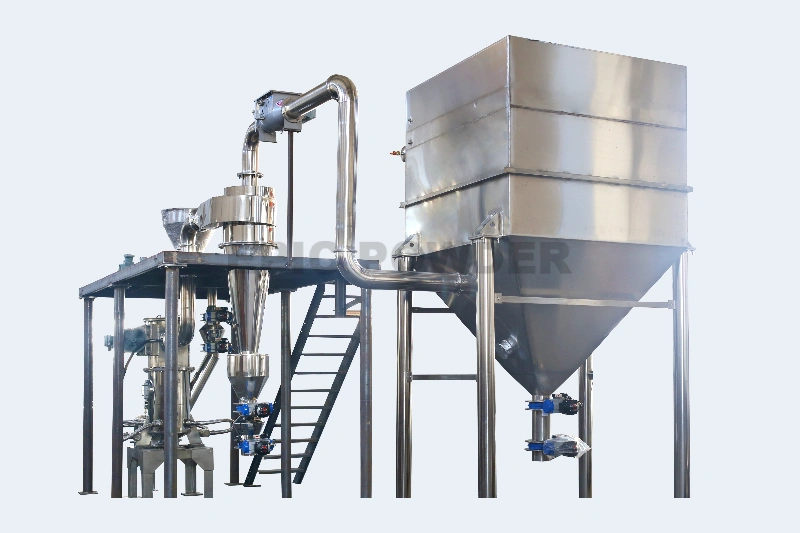
When choosing an air jet mill for NdFeB, understanding the different types available and how they fit your specific needs is key.
Spiral Jet Mills are common and ideal for fine grinding with smaller feed sizes. They rely on a spiraling airflow pattern that propels particles against each other, suitable for producing ultrafine NdFeB powders. However, they may struggle with larger feed sizes and can have limited throughput compared to other designs.
Fluidized Bed Opposed Jet Mills use high-speed jets from opposite directions to create uniform particle collisions. This design offers excellent particle size distribution control and efficient classification, critical for NdFeB powders where consistency impacts magnetic performance. The EPIC MQW series is a great example, providing closed-loop nitrogen or argon milling for oxidation prevention while maintaining steady capacity. These mills stand out for high-purity demands and scalable production.
Target/Orbital Mills create turbulence by circulating particles in a spinning motion, improving collision energy and grinding efficiency. They’re often favored in pilot-scale setups thanks to their precise control and gentler maintenance needs. However, they may not match the capacity of fluidized bed or spiral mills for large-scale NdFeB production.
2025 Innovations in Air Jet Milling
Looking ahead, hybrid designs that combine the best features of these mill types are emerging. AI-driven airflow control optimizes collision patterns in real time, improving energy efficiency and particle size consistency. Expect digital simulation tools, like 3D nozzle flow models, to help engineers select the perfect mill setup before purchase.
Here’s a quick comparison to guide you:
| Mill Type | Feed Size Suitability | Particle Control | Oxidation Prevention | Best For |
|---|---|---|---|---|
| Spiral Jet Mill | Small | Moderate | Basic | Ultrafine small batches |
| Fluidized Bed Opposed Jet | Medium to Large | High | Advanced (Closed-loop) | High-purity, large scale |
| Target/Orbital Mill | Small to Medium | Precise | Moderate | Pilot-scale, precise control |
Selecting the right type means balancing feed size, desired particle quality, oxidation controls, and scale of operation. This ensures optimal performance for your NdFeB grinding needs now and in 2025.
2025 Trends Shaping NdFeB Jet Mill Selection
As we move into 2025, several key trends are reshaping how manufacturers select air jet mills for NdFeB powder grinding.
Sustainability mandates are taking center stage. Low-emission compressors and gas recycling systems, especially for inert gases like nitrogen and argon, are now essential. These features help reduce the carbon footprint during milling and comply with increasingly strict environmental regulations.
On the technology side, smart advancements are making a big difference. IoT-enabled oxygen sensors offer real-time monitoring to prevent oxidation, while predictive maintenance reduces downtime by anticipating wear and tear before it happens. Plus, 3D nozzle airflow simulations are optimizing mill design to boost energy efficiency and particle size control.
Finally, supply chain resilience matters more than ever. Domestic sourcing of parts and equipment shields operations from tariff fluctuations and shipping delays. A Midwest magnet fabricator case shows how localized supply chains and air jet mill investments improved production speed and stability, showcasing the benefits of strategic sourcing.
For more on air jet milling in the chemical field, check out this detailed overview of applications of air jet mill in chemical industry.
Step-by-Step Guide to Evaluating and Purchasing the Right Air Jet Mill for NdFeB
Selecting the best air jet mill for NdFeB requires a clear, step-by-step approach to avoid costly mistakes. Here’s a straightforward guide to help you through the process:
- Audit Your Needs and PSD TargetsStart by defining your exact particle size distribution (PSD) goals, like D50 values, and assess your material’s feed size and batch volume. Knowing these upfront helps narrow down mill choices.
- Request Demos and Pilot RunsDon’t skip on testing. Ask vendors for demos or pilot runs with your NdFeB feedstock. This real-world trial confirms if the mill meets your fineness, yield, and oxidation control requirements.
- Benchmark Key SpecificationsCompare machines based on critical specs like compressed air pressure, nozzle count, classifier type, and uptime history. Efficient nozzle geometry and stable classification enhance energy use and product quality.
- Assess Ownership CostFactor in installation expenses, operator training, and ongoing maintenance or spare parts. A mill may look good on paper but budget realistically for the total cost of ownership.
- Vet Vendors CarefullyChoose suppliers with ISO certification and a solid support network. Reliable after-sales service ensures quick troubleshooting and minimizes downtime. Local service presence is a bonus, especially in regions focusing on supply chain resilience.
Following this checklist keeps your NdFeB jet mill investment sharp and aligned with 2025’s demands for sustainability, energy savings, and quality.
For deeper insights into milling processes and particle size control, explore our detailed page on the production process, which shares similar milling considerations.
Real-World Case Studies: EPIC Powder Machinery in Action
EPIC Powder Machinery has proven its edge with tangible results for NdFeB producers across industries. One standout example is a Midwest magnet fabricator that leveraged EPIC’s nitrogen-protected jet milling system to cut oxygen levels drastically. This led to improved powder purity and ultrafine particle size, boosting magnetic performance and reducing waste. Their ability to control oxidation during milling was a game-changer.
In aerospace manufacturing, an FAA-certified supplier adopted EPIC’s closed-loop argon milling setup. This met strict industry specs by preventing rare earth powder oxidation and ensuring consistent particle size, critical for high-reliability components. The argon environment also enhanced safety and streamlined compliance processes.
Across both cases, EPIC equipment delivered measurable benefits:
- Significant coercivity increases, enhancing magnet strength and durability
- Faster production runs due to steady particle size control and mill uptime
- Reduced scrap rates with tight oxidation control, cutting material loss
These real-world outcomes highlight why EPIC Powder Machinery is a smart choice for 2025-ready NdFeB jet milling needs. Their solutions blend robust engineering, sustainable operation, and advanced inert gas protection to elevate magnet powder quality across scales.
For more on how powder classification impacts product consistency, check out our detailed guide on classifying and separating.

“Thanks for reading. I hope my article helps. Please leave a comment down below. You may also contact EPIC Powder online customer representative for any further inquiries.“
–Jason Wang, Engineer Learn more
 English
  Spanish
  German
  French